Real Estate Marketing with Augmented Reality
Real estate professionals are using WebAR, AI 3D models, and AR QR Codes to let buyers explore...
Read articlePrompt-driven 3D for campaigns, prototypes, and concepts.
Type what you need — a chair, sneaker, packaging mockup, or hero prop — and generate multiple 3D directions in seconds. Perfect when you do not have photos yet.
Natural language
Input style
Multi-variant
Concept options
Browser preview
Instant QA
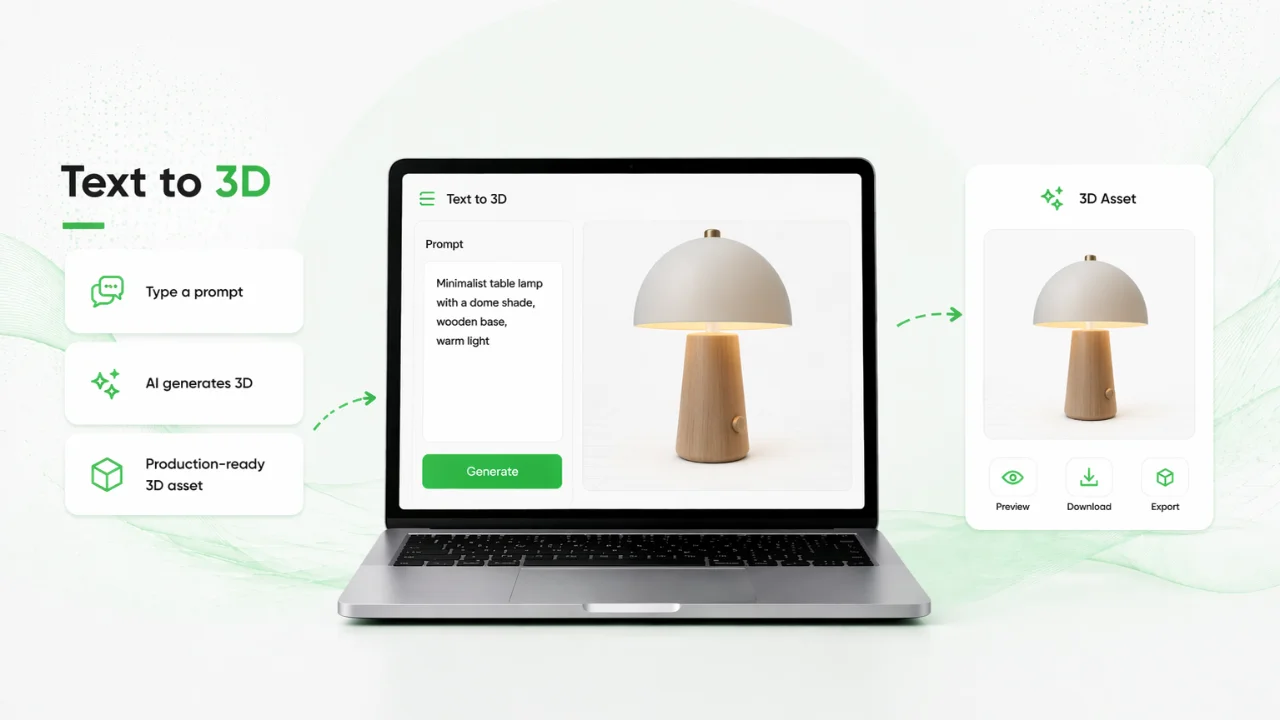
Type what you need — a chair, sneaker, packaging mockup, or hero prop — and generate multiple 3D directions in seconds. Perfect when you do not have photos yet.
Text to 3D generates 3D models from written prompts — furniture, footwear, packaging mockups, hero props, concept products, and campaign assets when you do not have photos yet.
No. Text to 3D is prompt-driven. Describe the object you want in plain language and AI builds a 3D model from your description.
Yes. Text to 3D can produce multiple style and concept variations per prompt, so teams can explore directions quickly before committing to a final asset.
Marketing, product design, ecommerce, education, and creative teams use Text to 3D for rapid prototyping, campaign concepts, and interactive content without a traditional 3D pipeline.
Yes. Generated models can be previewed in the browser and published as WebAR experiences with AR QR Codes, so customers explore concepts in their own space without an app download.
No. Text to 3D uses natural language input. If you can describe what you want to create, you can generate and publish a 3D model without CAD or sculpting experience.
ConvertInAR Blog
Articles that explain how teams use this workflow with WebAR and AI 3D creation.
Real estate professionals are using WebAR, AI 3D models, and AR QR Codes to let buyers explore...
Read articleFashion brands are using WebAR, AI 3D models, and AR QR Codes to let shoppers explore handbags,...
Read articleAn AI Text to 3D Model Generator lets anyone describe an object in words and generate a detailed 3D...
Read articleAR QR Codes let ecommerce shoppers scan, view, and interact with 3D products in WebAR from their...
Read articleContinue exploring the full ConvertInAR ecosystem by comparing use cases and pricing options.