ConvertInAR Blog
How AR QR Codes Increase Product Engagement for Ecommerce
Online shopping has made it easier than ever to purchase products from anywhere in the world. However, ecommerce still has one major limitation: customers cannot physically interact with products before making a purchase. They rely on photos, videos, and descriptions to make buying decisions, which often leads to uncertainty, abandoned carts, and product returns.
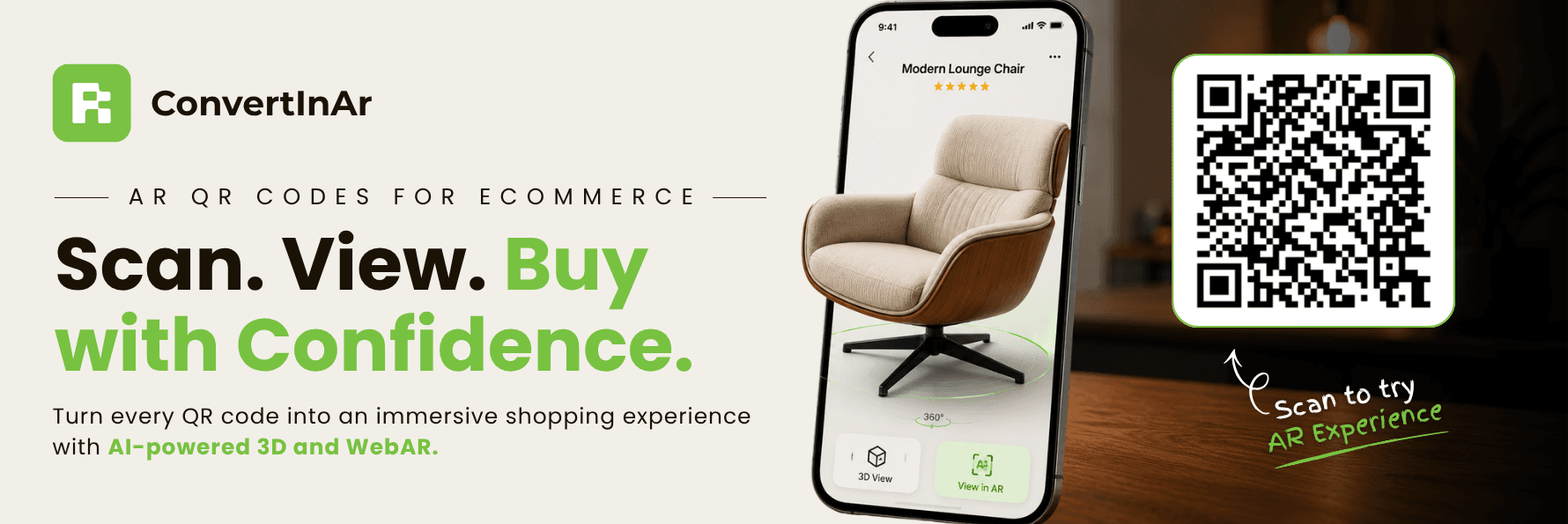
This is where AR QR Codes for ecommerce are changing the shopping experience. Instead of viewing static product images, customers can scan an AR QR Code and instantly interact with a realistic 3D version of the product using their smartphone browser. They can rotate it, inspect it from every angle, and even place it in their own environment through WebAR, all without downloading an app.
For ecommerce businesses, this creates a more engaging shopping experience that builds trust, improves product understanding, and helps customers make confident purchasing decisions. Platforms like ConvertInAR make this process simple by combining AI generated 3D models with browser based Augmented Reality and AR QR Codes.
What Are AR QR Codes?
An AR QR Code is a QR Code that launches an interactive Augmented Reality experience instead of opening a standard webpage.
When customers scan the code with their smartphone camera, they are taken directly to a WebAR experience where they can interact with a realistic 3D model of a product.
Unlike traditional Augmented Reality applications, WebAR runs directly in the browser. There is no app installation, no complicated setup, and no additional software required.
This frictionless experience makes AR QR Codes an effective solution for ecommerce brands that want to improve customer engagement while keeping the buying journey simple.
Why Product Engagement Matters in Ecommerce
Product engagement measures how actively customers interact with a product before purchasing it.
Higher engagement often leads to better purchasing decisions because customers gain a clearer understanding of what they are buying.
Traditional ecommerce websites typically rely on:
- Product images
- Videos
- Written descriptions
- Customer reviews
While these elements remain important, they cannot fully replace the experience of examining a product in real life.
Interactive 3D product visualization bridges this gap by allowing customers to explore products naturally, increasing confidence throughout the buying journey.
How AR QR Codes Improve Product Engagement
Interactive Product Visualization
Instead of looking at flat images, customers can rotate products, zoom in on important details, and inspect every angle.
This creates an immersive shopping experience that helps shoppers better understand product quality, design, and dimensions.
Interactive experiences also encourage visitors to spend more time on product pages, which often indicates stronger purchase intent.
Build Customer Confidence
Many online shoppers hesitate because they cannot visualize how a product will look in real life.
AR QR Codes allow customers to place products into their own environment using Web Based Augmented Reality.
For example, a customer shopping for a chair can see how it fits inside their living room before placing an order.
This additional confidence reduces hesitation and supports better buying decisions.
Reduce Product Returns
One of the biggest challenges in ecommerce is managing product returns.
Returns often happen because customers receive products that differ from their expectations.
Interactive 3D visualization provides a more accurate representation of products before purchase.
When customers clearly understand size, appearance, and design, they are less likely to return items because of unmet expectations.
Increase Social Engagement
People naturally share unique experiences.
Interactive Augmented Reality experiences encourage customers to create photos, videos, and social media content featuring products.
This user generated content helps businesses reach new audiences while increasing brand awareness organically.
Where Ecommerce Businesses Can Use AR QR Codes
Many businesses think AR QR Codes belong only on product pages.
In reality, they can improve engagement across multiple customer touchpoints.
Businesses can place AR QR Codes on:
- Product packaging
- Printed catalogs
- Retail displays
- Email campaigns
- Social media advertisements
- Trade show materials
- Business cards
- Product brochures
This allows customers to interact with products whether they are shopping online, visiting a physical store, or attending an event.
Industries Benefiting from AR QR Codes
Interactive product experiences are valuable across many industries.
Furniture brands allow customers to visualize sofas, tables, and home décor products before purchasing.
Fashion retailers showcase shoes, handbags, and accessories using interactive 3D models.
Beauty brands help customers explore premium packaging and product details.
Electronics companies demonstrate gadgets from every angle before customers buy.
Jewelry brands highlight craftsmanship that traditional photography cannot fully capture.
Automotive, manufacturing, education, restaurants, and real estate businesses are also adopting WebAR experiences to create more engaging customer interactions.
Best Practices for Using AR QR Codes
Businesses should focus on creating experiences that are useful rather than simply impressive.
Some proven best practices include:
- Use high quality AI generated 3D models.
- Place QR Codes where customers naturally expect product information.
- Ensure landing pages load quickly on mobile devices.
- Keep the WebAR experience simple and intuitive.
- Test QR Codes across different smartphones and browsers.
- Include a clear call to action encouraging customers to scan the code.
These small improvements can significantly increase customer engagement and improve the overall shopping experience.
How ConvertInAR Helps Ecommerce Businesses
ConvertInAR helps businesses create immersive ecommerce experiences without requiring technical expertise.
Using its AI Image to 3D Model Generator and AI Text to 3D Model Generator, businesses can create realistic 3D models that are ready for browser based Augmented Reality.
These models can be shared through AR QR Codes, allowing customers to interact with products instantly from their smartphone browser.
Because the entire experience runs on WebAR, customers do not need to install an application. This removes friction from the buying journey and makes interactive shopping accessible to a wider audience.
Whether you sell furniture, fashion, beauty products, electronics, collectibles, or home décor, ConvertInAR helps transform traditional product pages into engaging digital experiences.
The Future of Ecommerce Is Interactive
Customer expectations continue to evolve as online shopping becomes more competitive.
Shoppers increasingly expect richer product experiences before making purchasing decisions.
Interactive technologies such as AI generated 3D models, WebAR, and AR QR Codes are helping businesses meet these expectations while creating memorable shopping journeys.
As browser based Augmented Reality becomes more widely adopted, businesses that invest in interactive product visualization today will be better positioned to improve customer engagement, strengthen brand trust, and stay ahead of competitors.
Final Thoughts
Static product images alone are no longer enough to deliver the shopping experience modern customers expect.
AR QR Codes allow ecommerce businesses to bridge the gap between physical and digital shopping by giving customers the ability to interact with products before purchasing.
With ConvertInAR, businesses can generate AI powered 3D models, publish immersive WebAR experiences, and share them through AR QR Codes without requiring customers to download an app.
For brands looking to increase product engagement, improve customer confidence, and create memorable shopping experiences, AR QR Codes represent a practical investment in the future of ecommerce.