ConvertInAR Blog
How Augmented Reality Restaurant Menus Are Transforming Dining Experiences in 2026
Restaurants are constantly searching for new ways to create memorable dining experiences while increasing customer satisfaction and revenue. Digital menus and QR codes became popular in recent years, but customer expectations have evolved. People now want interactive experiences that help them understand what they are ordering before placing an order.
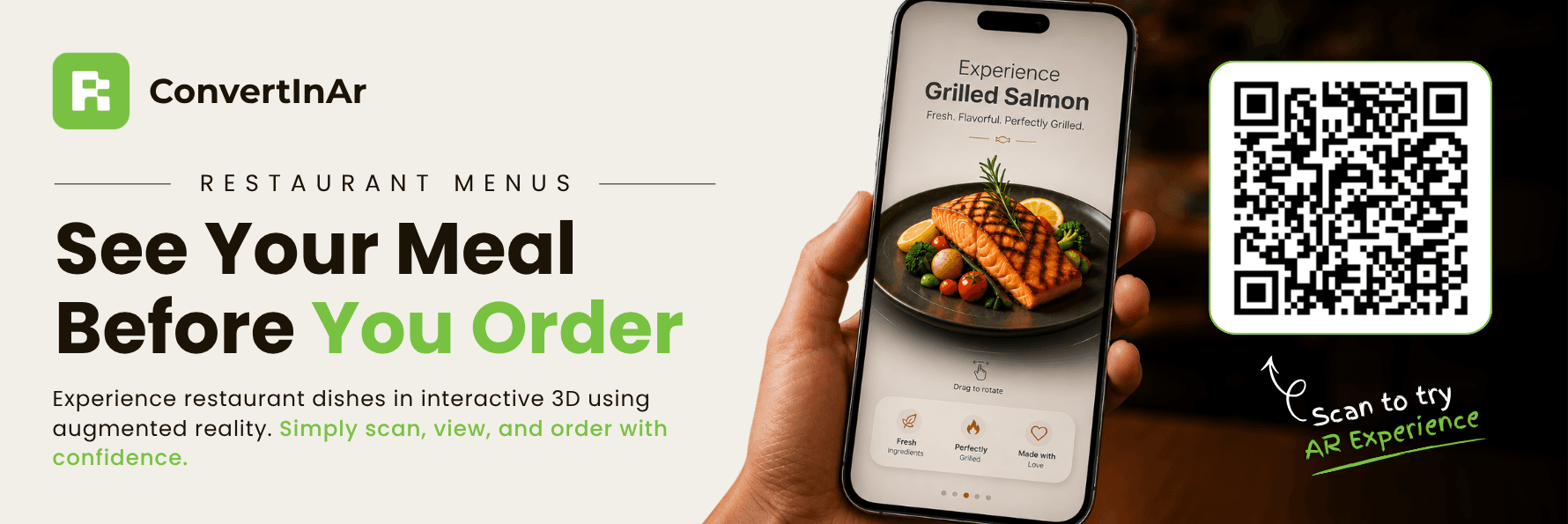
This is where an Augmented Reality Restaurant Menu changes the dining experience. Instead of displaying only text and images, restaurants can let customers view realistic 3D dishes directly on their smartphones. By scanning an AR QR Code, customers can see menu items from every angle, understand portion sizes, and feel more confident about their choices without downloading an app.
With platforms like ConvertInAR, restaurants can easily create immersive WebAR experiences that make menus more engaging while helping customers make informed ordering decisions.
Why Traditional Restaurant Menus Are No Longer Enough
Traditional printed menus have served restaurants for decades, but they also come with several limitations. Static images cannot accurately represent portion sizes, food presentation, or special ingredients. Customers often rely on descriptions or recommendations from staff before deciding what to order.
Even digital QR code menus usually display only text and images. While they reduce printing costs, they rarely improve the overall customer experience.
Today's diners expect technology that makes ordering easier and more interactive. They frequently research restaurants online, browse food photos on social media, and compare menu items before visiting. Restaurants that embrace innovative technology stand out from competitors and create stronger first impressions.
What Is an Augmented Reality Restaurant Menu
An Augmented Reality Restaurant Menu combines traditional digital menus with WebAR technology. Customers simply scan an AR QR Code using their smartphone camera, and a realistic 3D version of a dish appears directly in their surroundings.
Instead of imagining what a meal looks like, customers can rotate the model, zoom in on details, and view the dish from different angles.
Unlike many augmented reality applications, WebAR works directly in a mobile browser. Customers do not need to install a separate application, making the experience fast, simple, and accessible for everyone.
ConvertInAR enables restaurants to publish these experiences within minutes, allowing businesses of all sizes to modernize their menus without investing in expensive hardware or custom mobile applications.
Benefits of Augmented Reality Restaurant Menus
Improve Customer Confidence
One of the biggest reasons customers hesitate before ordering is uncertainty. Menu descriptions often fail to communicate portion size, presentation, or ingredients accurately.
Viewing realistic 3D dishes removes this uncertainty. Customers know exactly what they are ordering, resulting in greater confidence and a better dining experience.
Increase Customer Engagement
Interactive experiences naturally capture attention longer than static menus. Customers spend more time exploring dishes, sharing their experiences with friends, and interacting with the restaurant's menu.
Longer engagement often leads to increased interest in premium dishes, desserts, beverages, and chef specials.
Reduce Ordering Mistakes
Customers sometimes misunderstand menu descriptions or order dishes that differ from their expectations. AR visualization provides a clearer understanding of each meal, reducing confusion and minimizing unnecessary order changes.
This benefits both customers and restaurant staff by creating smoother service.
Encourage Social Sharing
Unique dining experiences are highly shareable on platforms like Instagram, TikTok, and Facebook. Customers frequently record videos or take photos while interacting with augmented reality content.
These user generated posts provide valuable organic marketing that helps restaurants reach new audiences without additional advertising costs.
How AR QR Codes Improve Restaurant Marketing
Marketing a restaurant has become increasingly competitive. Attractive food photography remains important, but immersive experiences leave a stronger impression.
Restaurants can place AR QR Codes on tables, takeaway packaging, social media posts, brochures, and promotional materials. Customers can instantly preview signature dishes before visiting the restaurant or placing an online order.
This creates excitement while helping potential customers visualize the dining experience.
Restaurants launching seasonal menus, limited time offers, or special events can also use AR experiences to showcase exclusive dishes in an engaging way.
How ConvertInAR Helps Restaurants Create Interactive Menus
ConvertInAR makes it easy for restaurants to transform traditional menus into immersive digital experiences.
Using AI Image to 3D model generation and WebAR technology, restaurants can create realistic food visualizations that customers access through simple QR code scans.
Instead of requiring expensive application development, ConvertInAR delivers browser based augmented reality experiences that work across modern smartphones.
Restaurant owners can showcase signature dishes, desserts, beverages, and promotional items while creating a memorable customer journey from discovery to ordering.
Whether you own a local café, fine dining restaurant, food truck, bakery, or franchise, interactive restaurant menus help your business stand out in an increasingly digital marketplace.
Restaurants That Benefit the Most
Almost every food business can improve customer engagement using augmented reality menus.
Fine dining restaurants can highlight premium dishes with detailed 3D presentations that emphasize quality and craftsmanship.
Fast casual restaurants can simplify ordering by allowing customers to preview meal combinations before making a decision.
Cafes and bakeries can showcase fresh pastries, cakes, and beverages in realistic detail, encouraging additional purchases.
Hotels and resorts can modernize room service menus by giving guests an interactive way to browse available meals.
Even food delivery businesses can use AR QR Codes to help online customers better understand menu items before placing an order.
The Future of Restaurant Technology
Customer expectations continue to evolve as digital experiences become part of everyday life. Restaurants that adopt technologies like augmented reality today are preparing for the future of dining.
Interactive menus not only improve customer satisfaction but also strengthen brand perception. Businesses that invest in innovation are more likely to attract younger audiences, increase repeat visits, and differentiate themselves from competitors.
As AI generated 3D models become more realistic and WebAR technology continues to improve, augmented reality menus will become a standard feature rather than a novelty.
Restaurants that embrace this transformation early will be better positioned to build stronger customer relationships and deliver memorable dining experiences.
Final Thoughts
Restaurants are no longer limited to static menus and food photography. Augmented Reality restaurant menus provide customers with a richer, more interactive experience that builds confidence, increases engagement, and helps businesses stand out in a competitive market.
With ConvertInAR, creating immersive WebAR restaurant menus is simple, scalable, and accessible without requiring customers to install an app. As restaurants continue embracing digital innovation, interactive dining experiences will play an increasingly important role in attracting new customers and encouraging repeat visits.